خصم 30٪ استخدم الكود: JLS30 (الحد الأدنى للطلب 200 درهم إماراتي) (لأول زيارة فقط*)





75 AED off on first visit
Sign up for special offers and updates
خطأ: نموذج الاتصال غير موجود.
Common Myths About Moroccan Baths Every Man Should Know
A Moroccan bath is one of the most recognised traditional grooming rituals in the Middle East and North Africa. It commonly combines warm steam, black soap, body exfoliation and rinsing to create a thorough cleansing and relaxation experience.
Interest in Moroccan bath Dubai services has grown among men seeking a structured grooming treatment rather than an ordinary shower or quick body scrub. However, online descriptions sometimes exaggerate what the service can achieve.
A Moroccan bath can help cleanse the skin’s surface, remove loose dead skin cells and provide a relaxing personal-care experience. It should not be promoted as a medical treatment, a detoxification procedure, a weight-loss method or a cure for skin conditions.
This guide addresses the most common myths surrounding a Moroccan bath for men, explains what normally happens during the service and outlines the precautions customers should understand before booking.
What Is a Moroccan Bath?
A traditional Moroccan bath, sometimes called a Moroccan hammam, generally includes several stages:
- Time in a warm, humid room
- Application of Moroccan black soap, often called savon beldi
- Body exfoliation using a textured kessa glove
- Rinsing with warm water
- Optional masks, oils or other grooming additions
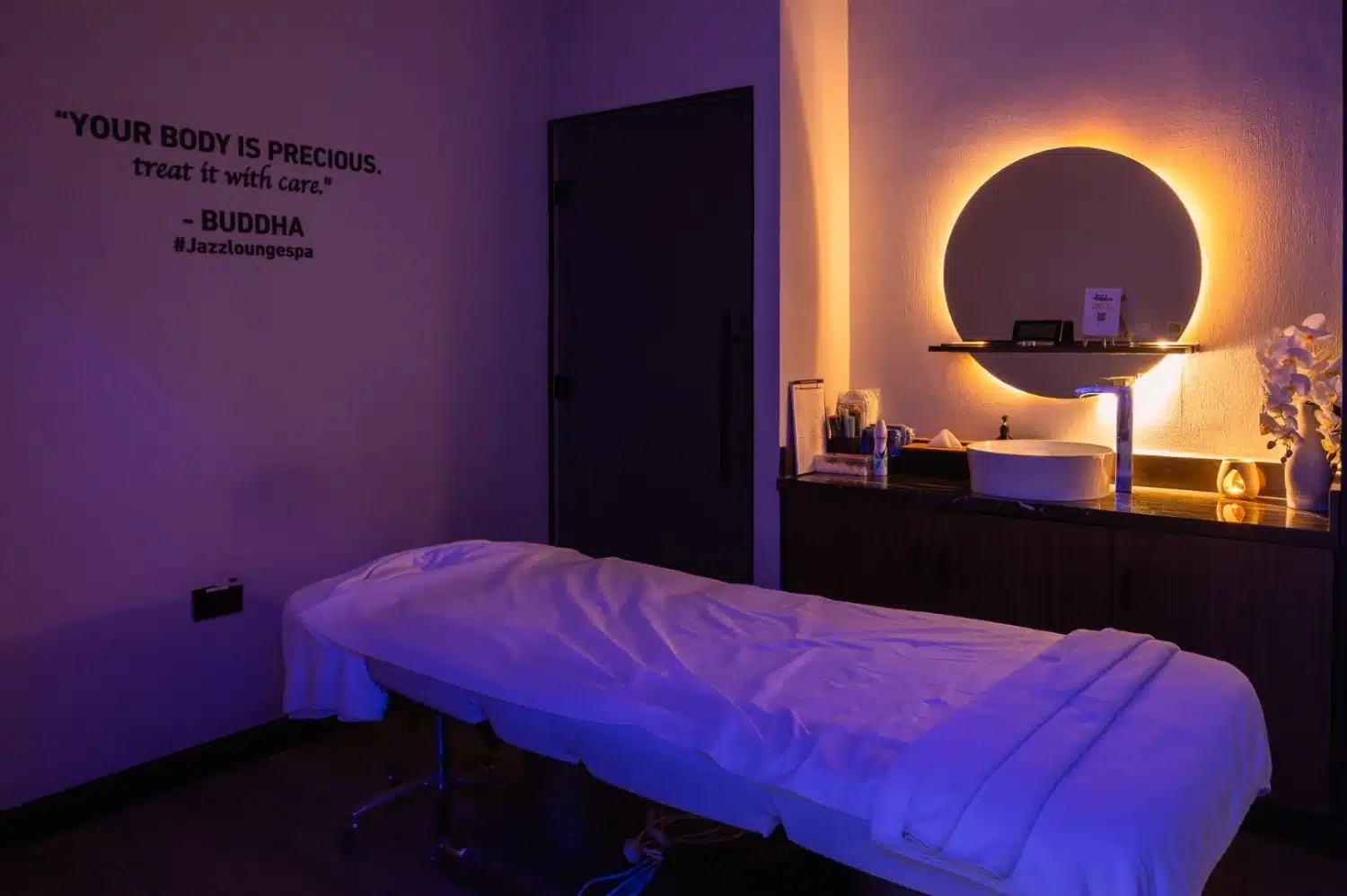
Jazz Lounge Spa’s current service describes treatment in a private steam room followed by black-soap application, kessa-glove exfoliation and rinsing. Different packages may include additional products or services.
The exact process, session length, products and exfoliation intensity can differ between spas. Customers should therefore check the service description rather than assuming every Moroccan bath follows the same routine.
Myth 1: Moroccan Baths Are Only for Women
A Moroccan bath is not inherently a women-only service.
Men may choose it as part of a wider grooming routine, particularly when ordinary washing does not address rough-feeling areas or accumulated surface skin.
A Moroccan bath for men may appeal to customers who want:
- Full-body exfoliation
- A structured grooming appointment
- Temporary improvement in skin smoothness
- Relaxation in a private setting
- Preparation before an event or holiday
- A service combined with massage, barbering or nail care
Jazz Lounge Spa operates as a men-focused grooming and wellness business and offers dedicated Moroccan-bath treatments at its UAE locations.
The treatment should still be selected according to skin sensitivity and health—not gender stereotypes.
Myth 2: A Moroccan Bath Is Just a Hot Shower
A normal shower cleans sweat, oil and everyday surface dirt. A Moroccan bath adds prolonged warmth, black-soap application and structured mechanical exfoliation.
The main difference is the exfoliation stage. A textured glove is used to loosen and remove surface skin cells after the skin has been exposed to warmth and moisture.
That does not mean the bath cleans the body at a medically “deeper” level. It is a grooming and wellness experience, not a clinical cleansing procedure.
The value comes from:
- Professional application
- Full-body access
- Controlled exfoliation
- Time dedicated to grooming
- A private spa environment
Customers should not expect the bath to remove substances from internal organs or correct medical skin problems.
Myth 3: Steam Opens the Pores and Pulls Out Impurities
The phrase “opens the pores” is commonly used in spa marketing, but it oversimplifies what heat and moisture do to the skin.
Warmth and humidity may soften surface material and make the exfoliation process feel easier. They do not turn skin pores into doors that open to release deep toxins.
Visible pore size is influenced by factors such as sebum production, skin elasticity, genetics and acne history rather than simply whether the skin has recently been exposed to steam.
A safer description is:
Steam helps warm and soften the skin before cleansing and exfoliation.
Jazz should avoid claiming that steam opens every pore, extracts deep contamination or permanently reduces pore size.
Myth 4: The Harder the Scrubbing, the Better the Result
Strong exfoliation is not automatically more effective.
The purpose of the kessa glove is to remove loose surface cells without leaving the skin raw, painful or damaged. Pressure should be adapted to the customer’s skin sensitivity and treatment history.
Research on mechanical irritation shows that friction can impair skin-barrier function, particularly when combined with extended water exposure or detergents.
Excessive scrubbing may cause:
- Redness
- Burning or stinging
- Tenderness
- Irritation
- Small abrasions
- Worsening of sensitive skin
- Temporary changes in pigmentation
Customers should tell the therapist when pressure feels excessive. Pain is not evidence that more dead skin is being removed or that the treatment is more effective.
The therapist should also avoid vigorous exfoliation over cuts, inflamed skin, sunburn, active rashes or recently treated areas.
Myth 5: Moroccan Baths Detoxify the Body
“Detox” is one of the most frequently repeated claims surrounding steam baths and spa treatments.
A Moroccan bath cleans and exfoliates the skin’s surface. It has not been proven to remove unspecified toxins from the bloodstream, liver, kidneys or other internal organs.
The US National Center for Complementary and Integrative Health notes that there is no compelling research supporting commercial detox programmes for eliminating toxins from the body. Sauna use is among the approaches sometimes included within these unsupported detox claims.
Jazz Lounge Spa should therefore replace phrases such as:
Detoxifies your skin and body.
With:
Cleanses and exfoliates the surface of the skin.
This wording is more accurate and consistent with UAE requirements against misleading descriptions of a service’s expected results.
Myth 6: Sweating During the Bath Burns Fat
Sweating is not the same as losing body fat.
A person may temporarily weigh less after prolonged heat exposure because of water loss. That change is not permanent fat loss and should be corrected through normal hydration.
A Moroccan bath should not be promoted as:
- A slimming treatment
- A body-fat treatment
- A metabolic reset
- A replacement for exercise
- A permanent method of reducing measurements
Heat exposure also creates physiological strain. In a small controlled study of healthy men, steam heat caused substantial increases in body temperature and heart rate, and the high humidity placed greater strain on the body than dry sauna exposure.
Customers who feel dizzy, faint, nauseated or unusually uncomfortable should leave the heated area and inform the therapist.
Myth 7: A Moroccan Bath Treats Acne, Eczema or Other Skin Conditions
A Moroccan bath is a grooming treatment, not a dermatology service.
Exfoliation may temporarily improve how rough or dull surface skin feels, but it does not cure:
- Acne
- Eczema
- Psoriasis
- Fungal infections
- Folliculitis
- Allergic rashes
- Hyperpigmentation
- Other diagnosed skin disorders
Strong steam, soap or friction may aggravate certain conditions.
Someone with active eczema, psoriasis, inflamed acne, an unexplained rash, infected skin or open wounds should seek appropriate advice before booking. A therapist should not diagnose the condition or guarantee that exfoliation will improve it.
Persistent, painful or spreading skin symptoms require assessment by a qualified healthcare professional.
Myth 8: A Moroccan Bath and Turkish Bath Are Exactly the Same
The two services have similarities, but they are not always identical.
Both may involve heat, water, cleansing and relaxation. A Moroccan bath commonly places greater emphasis on black soap and kessa-glove exfoliation. A Turkish-bath experience may focus more on bathing, foam, heat and massage, depending on the spa.
Modern commercial packages also vary considerably. One spa may use the terms interchangeably, while another may offer clearly separate protocols.
Customers should compare:
- Treatment stages
- Session duration
- Products used
- Exfoliation method
- Massage inclusions
- Private-room arrangements
- Price
- Aftercare advice
The service name alone does not tell the customer exactly what will happen.
Myth 9: Moroccan Baths Are Safe for Everyone
Many healthy adults tolerate the service well, but steam and exfoliation are not suitable in every situation.
Extra caution or medical advice may be appropriate for people with:
- Cardiovascular conditions
- Problems tolerating heat
- Low blood pressure or fainting history
- Significant circulation problems
- Pregnancy
- Recent surgery
- Open wounds
- Active infection
- Fever
- Severe or inflamed skin conditions
- Reduced skin sensation
- Recent laser, waxing or strong chemical treatments
Steam exposure may increase cardiovascular and thermal strain, particularly when humidity prevents sweat from evaporating efficiently.
Customers should disclose relevant medical information before treatment. The spa should modify, postpone or decline the service when safety is uncertain.
Chest pain, severe dizziness, breathing difficulty or fainting require urgent medical attention rather than continued spa treatment.
Myth 10: More Frequent Moroccan Baths Always Produce Better Skin
There is no universal, medically required Moroccan-bath schedule.
The appropriate frequency depends on:
- Skin type
- Skin sensitivity
- Exfoliation intensity
- Products used
- Other grooming treatments
- Response after the previous appointment
- Personal preference
Frequent or aggressive exfoliation may weaken the skin barrier and produce more irritation rather than better results.
Someone with sensitive or dry skin may need longer intervals or lighter pressure. Customers should wait until redness and tenderness have completely resolved before considering another exfoliating treatment.
A spa should not prescribe an automatic schedule to every customer without considering individual response.
Myth 11: No Preparation or Aftercare Is Needed
A Moroccan bath does not require complicated preparation, but a few steps can make the experience safer and more comfortable.
Before the appointment
- Report skin conditions, allergies and recent procedures.
- Mention blood-thinning medicine or a history of easy bruising.
- Avoid arriving already dehydrated.
- Do not book over sunburned, cut or infected skin.
- Ask which products and exfoliation tools will be used.
- Confirm whether massage or other add-ons are included.
After the appointment
- Use a simple moisturiser if the skin feels dry.
- Avoid additional scrubbing on the same day.
- Delay strong acids, retinoids or harsh body products if irritation is present.
- Avoid scratching exfoliated areas.
- Monitor unusual redness, pain or blistering.
- Seek medical advice if a reaction is severe or persistent.
Aftercare should be adjusted to the customer’s skin and the intensity of the treatment.
Myth 12: All Moroccan Bath Services Offer the Same Quality
The term “Moroccan bath” does not guarantee a particular standard.
When comparing Moroccan bath Dubai providers, customers should examine:
- Hygiene and room cleanliness
- Whether reusable tools are appropriately cleaned
- Product information
- Therapist experience
- Privacy and draping procedures
- Treatment duration
- Pressure adjustment
- Contraindication screening
- Clear prices
- Realistic advertising claims
- Verified customer feedback
UAE consumers are entitled to correct information and a safe environment when receiving a service. Misleading descriptions of a service’s characteristics or expected outcomes may fall within consumer-protection rules.
A provider should not rely only on words such as “best,” “detoxifying” or “medical-grade” without evidence.
What to Expect at Jazz Lounge Spa
Jazz Lounge Spa offers several Moroccan-bath packages for men. Its published process includes private steam-room time, black-soap application, kessa-glove exfoliation and warm-water rinsing, with selected packages offering additional steps.
Before treatment, the therapist should confirm:
- The selected package
- Skin sensitivity
- Relevant health information
- Preferred exfoliation pressure
- Any areas that should be avoided
- Expected treatment duration
During exfoliation, customers should communicate when an area feels too sensitive. The aim should be thorough but controlled grooming—not maximum pressure.
Jazz Lounge Spa has Dubai branches in Palm Jumeirah, Jumeirah 1, Umm Suqeim and Mirdif. Customers should confirm current branch hours, treatment availability and booking details before visiting.
Frequently Asked Questions
Is a Moroccan Bath Painful?
It should not be painful. Exfoliation can feel firm, but burning, sharp pain or raw skin indicates that the pressure may be too strong.
Does a Moroccan Bath Remove Toxins?
No reliable evidence shows that it removes toxins from internal organs. It cleanses and exfoliates the skin’s surface.
Can Men With Sensitive Skin Have a Moroccan Bath?
Possibly, but the products, heat and exfoliation pressure may need to be modified. Active rashes, broken skin or severe sensitivity may require postponement.
Does a Moroccan Bath Remove Body Fat?
No. Sweating may cause temporary water loss, but it does not remove body fat.
Can I Have a Moroccan Bath After Waxing?
Immediate exfoliation may further irritate recently waxed skin. Ask the spa about an appropriate interval based on the treatment and skin response.
How Often Should Men Book a Moroccan Bath?
There is no fixed schedule suitable for everyone. Frequency should depend on skin tolerance, treatment intensity and personal grooming preferences.
Is a Moroccan Bath Better Than a Regular Shower?
The services have different purposes. A shower provides routine hygiene, while a Moroccan bath offers structured steam, cleansing and mechanical exfoliation.
Conclusion
A Moroccan bath can provide a thorough grooming and relaxation experience for men, but realistic expectations matter.
It may remove loose surface skin cells, support temporary smoothness and provide time to relax. It does not detoxify internal organs, burn body fat, cure skin disease or guarantee medical benefits.
Customers looking for a Moroccan bath for men should compare hygiene, privacy, treatment steps, therapist communication and the accuracy of advertising claims—not only promotional labels.
Considering a Moroccan bath in Dubai? Explore Jazz Lounge Spa’s available treatments and select your nearest branch to book a men’s grooming appointment.
Wellness disclaimer: This article provides general information and does not replace medical or dermatological advice. Moroccan baths may not be suitable for people with active skin conditions, open wounds, infection, significant heat sensitivity or certain medical conditions. Seek professional advice when safety is uncertain.
